A year in orbit: ISS deployment tests radiation detectors for future space missions

April 17, 2026, 3:02PMNuclear NewsMichael Streicher
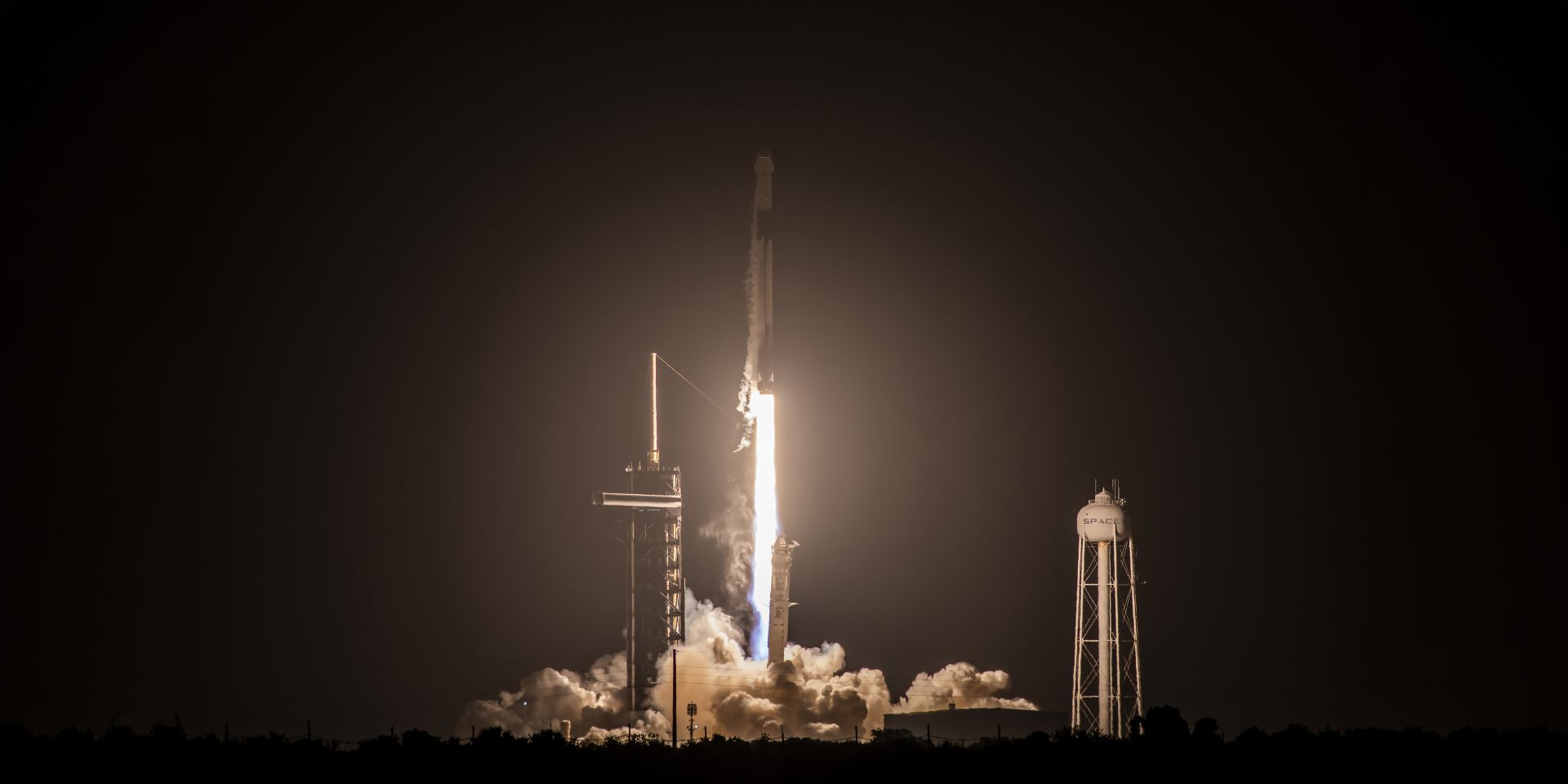
The SpaceX Falcon 9 rocket carrying the Dragon spacecraft lifted off from Launch Complex 39A at NASA’s Kennedy Space Center in Florida on Monday, April 21, 2025, to the ISS. Dragon delivered a variety of science experiments, including novel radiation detection instrumentation. (Photo: NASA)

The predawn darkness on a cool Florida night was shattered by the ignition of nine Merlin engines on a SpaceX Falcon 9 rocket. The thrust of the engines shook the ground miles away. From a distance, the rocket appeared to slowly rise above the horizon. For the cargo onboard, the launch was anything but gentle, as the ignition of liquid oxygen generated more than 1.5 million pounds of force. After the rocket had been out of sight for several minutes, the booster dramatically returned to Earth with several sonic booms in a captivating show of engineering designed to make space travel less expensive and more sustainable.

UMich leads Space Force institute on hybrid nuclear power and propulsion concept

November 8, 2024, 12:01PMNuclear News
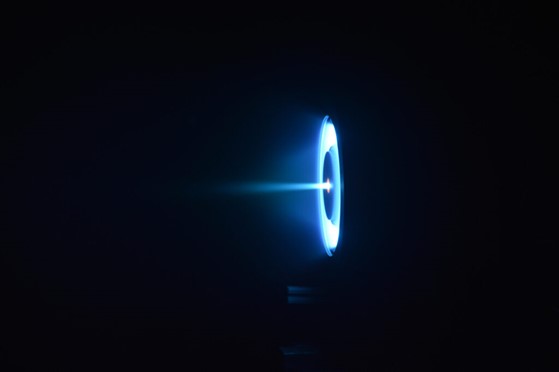
The H9 Hall thruster, developed at UMich’s Plasmadynamics and Electric Propulsion Laboratory. (Image: William Hurley/University of Michigan)

Seeking spacecraft that can “maneuver without regret,” the U.S. Space Force is investing $35 million in a national research team led by the University of Michigan to develop a spacecraft with an onboard microreactor to produce electricity, with some of that electricity used for propulsion. But this spacecraft would not be solely dependent on nuclear electric propulsion—it would also feature a conventional chemical rocket to increase thrust when needed.

How can the nuclear community support space applications?

April 22, 2024, 7:01AMNuclear NewsSean Doherty

Sean Doherty

The most important thing the nuclear community can do to support space nuclear applications is the same thing we must focus on for terrestrial nuclear science: developing the trust of the American public.

Americans are widely supportive of NASA, and space has long captivated our imaginations. Recently, the publicity surrounding the new U.S. Space Force and the popularity of commercial rocket launches have drawn the public eye skyward. We don’t need to convince people that space is important and exciting, but we do have a long way to go in promoting nuclear power to the public.